Showing posts with label youtube. Show all posts

Sunday, June 21, 2015

Rethinking Music with Beck's Record Club

You wish... and so do I, to be honest

Imagine taking a group of musician with styles that only the most bizarre venn diagram would show overlapping traits. Then, put them in a room and have them cover another band's record. This is the goal of The Record Club, and the mission statement of the project goes a little something like this: 
Record Club is an informal meeting of various musicians to record an album in a day. The album chosen to be reinterpreted is used as a framework. Nothing is rehearsed or arranged ahead of time. A track is put up here once a week. The songs are rough renditions, often first takes that document what happens over the course of a day as opposed to a polished rendering.There is no intention to 'add to' the original work or attempt to recreate the power of the original recording. Only to play music and document what happens.
Beck started Record Club in June of 2009, but I didn't find out about it until recently. After watching some of Beck's old music videos online,  I let youtube cycle through videos on its own while I opened another tab on my browser to research for an upcoming article. At some point, a song that  I was unfamiliar with came on. Beginning with part of the original INXS song, "Gun in the Sky," the video goes into a reworking the song, beginning with a drum beat that could belong to an industrial band before Angus Andrew, of The Liars, starts singing. Scratchy guitar comes in to flesh out moments and is followed by a clumsy keyboard line that could be coming from a child's casio piano or melodica.

Joined by members of The Liars, Os Mutantes, Keyboardist Brian LeBarton, and St. Vincent, Beck would go into the studio to cover Kick, by INXS. While those musicians may all share influences like Talking Heads, Beatles and random jazz figures, they record with very different styles and unique approaches to melody and rhythm which sometimes result in the abandonment of them, as with Liars. With "New Sensation," reverbed violins and flirting background vocals come in to produce what tonaly sounds like it could have been a b-side from the Sea Change sessions. This aesthetic would carry over to the group's version of "Devil Inside," to remove all of the attitude INXS put into the song and replace it with a haunted sound.

Abandoning the others, Beck takes over all roles for a three track version of "The Loved One." Structurally, his version is close to the original, with electric guitar substituted for acoustic to end up with a song that reflects his "Mellow Gold" era.

It's not just Beck taking control through the whole experiment. "Never Tear Us Apart" is a nice collaboration that follows the original song closely and shows off Annie Clark's singing. With "Mystify," The group moves through upbeat to calm moments. The cover stays in the calm area, breaking it down and reworking it as a country song, with emotional violin, pensive guitar and thoughtful vocal delivery to make probably the best song from the session, except maybe for it's closer.

Ending the session and record is "Tiny Daggers." For this track, members of The Liars take control of the creative direction to make the song sound nothing like its original. Where other songs make it obvious that Record Club is Beck's pet project, "Tiny Daggers" sound like a Liars song, not a cover. With menacing drums, noisy electric guitars and a reworking of the vocals, something that doesn't at all resemble the source material comes out of the experiment to produce an angry song nine minutes longer than the original.

Beck and friends have done four other sessions, covering Velvet Underground and Nice, The Songs of Leonard Cohen, Yanni's Live At The Acropolis and Oar, by Skip Spencer. Videos are available on youtube and tracks are available on Beck's website. They're all worth checking out, but I think the version of Kick is the best one and hope Beck will return to do more sessions.


Monday, June 15, 2015

Imitation, Stagnation & The Digital Frontier: How To Get Away With Comedy In The 21st Century

A studio executive walks into a writers' room. The executive changes the direction of the sitcom. No one laughs.

It's fairly common to see trends emerge. Sometimes trends come from geographical locations, as with Hair Metal in the sunset strip, Grunge in Seattle or Gangsta Rap that radiated from Compton before moving to New York. Those examples just came from the 90's. California was the birthplace for psychedelic music in the 60's. With the assistance of radio and television, Jefferson Airplane's white rabbit and the Door's fire would cross the country and influence people that would take music in new directions, but it also spawned a wave of imitations as well. When a style becomes popular, be it  in cinema, music, fashion, it becomes imitated. When a record company puts out a Britney Spears, another company come out with a Christina Aguilera. This is the way competition works in commercial societies. This is even true for comedy.

The Three Stooges are Forever Funny
Since before video, competing comics have been stealing, borrowing, buying and copying bits and styles. When Charlie Chaplin hit vaudeville with a physical comedy routine that drew an audience big enough to turn him into a movie star, other performers were paying attention. Soon after, a string of acts including The Three Stooges came out to entertain and earn money with physical comedy. While Chaplin was more political and had the charm and spirit of an underdog that made audiences cheer for him, the Stooges weren't stealing as much as borrowing when they played scheming and violent characters that were constantly hoisted with their own petard. They were also making movies with sound, something Chaplin movies were lacking when his career would overlap with the Stooges.

spit take

Today, hollywood is putting out more sequels than ever, making it hard to know if audiences can't get enough of something good, or if executives don't know how to tell when the milk has spoiled. Guidelines can offer a checklist that identifies tried and true methods. But, when followed too closely, that checklist can be a guide to a circular path. This is the case with late night television. It's understandable that television executives would want to repeat the success of a show they are fortunate to have greenlit, but when they get too caught up in not wanting failure, you can easily get a product that clearly tries to imitate. When Stephen Colbert ended The Colbert Report, Larry Wilmore took over his time slot to create The Nightly Show, which comes off as a depressing imitation of The Daily Show and doesn't even bother to create a unique title for the show as much as bank off The Daily Show's success. The Colbert Report wasn't The Daily Show. While The Daily Show was busy mocking the subjects of major news stories and the cable hosts that discuss them, The Colbert Report took the format of a cable news show to satire far right commentators, specifically Bill O'Reilly. This difference allowed both shows to make fun of the same topics without fear of coming up with the same jokes.

Since their topics and structures came from cable, it's fitting that both shows aired on cable channel Comedy Central. Also, these shows probably wouldn't be able to get away with some of the bits they do on network. Something else to consider is that Comedy Central (a member of the Viacom conglomerate) has no ties to the cable news networks and companies it mocks, which make it clear from hurting the reputation of the Viacom family and sponsors tied to Comedy Central. Being on cable, these shows have freedom and less restrictions from censors. These freedoms give The Nightly Show no excuse to not go for a more original and daring feel, to do something that separates itself from The Daily Show, beyond the comedy-infused roundtable discussion it steals from Bill Maher.

letterman licks an ipad
Granny Smith or Golden Delicious?
Debuting in the morning hours, censors and sponsor obligations didn't prevent David Letterman from pushing the boundaries of what was appropriate for tv, familiar to what came before, or even interesting to viewers. Johnny Carson may have been the first person to take advantage of late night, making The Tonight Show something special by bringing out out drunk guests and including sexuality to an audience that grew up with a black and white TV set, but Letterman really exploited what late night hours could do. Letterman's morning show wouldn't last long. This didn't mean his style needed changing to make people laugh. The format stayed the same when executives realized it worked better in late night, perfect for the slot after The Tonight Show, which it would compete with when letterman moved to CBS. Wondering "will it float?," and "is this anything?," a brand of irreverence dominated the comic style of Letterman for over thirty years as a TV host that didn't mind if Justin Beiber or Cher weren't behind the jokes they would be a part of. In a lot of ways, Late Show with David Letterman created the template for what late night TV would become once Carson retired. Looking at current late night shows, it's clear how Conan O'Brien, Seth Meyers, Jimmy Kimmel, and Jimmy Fallon all grew from Letterman's style of comedy.
Comedy by Conan, a new style?

The current cast of late night hosts build on approaches Letterman stylized for late night audiences, but each has a different flavor that prevents them from being direct imitations. Everybody's best friend, Fallon is the late night Mr. Nice Guy and the cute one. O'Brien is the class clown and the smart one. Kimmel is the rebel, employing his family and kicking his first season off with an open bar, as if he was still hosting The Man Show. Seth Meyers is the oddball in the group who took a lot of his Weekend Update bits with him when he signed on to host Late Night.

Though these shows owe a lot to Letterman, it's hard to say they are imitating him as much as being strongly influenced by him, and continuing on the new late night formula. When Conan and Meyers took over Late Night, they were taking on a show Letterman created, and facing a time slot Letterman set a precedents for and a demographic he mastered appealing to. When Fallon took it over, he did the only thing he knows, the thing he still does as host for The Tonight Show, he acts kind of silly, but clean and gets starstruck when he interviews big names.

Pardon my French
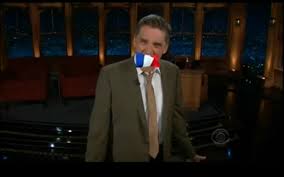
One part of late night that Letterman didn't directly influence was The Late Late Show with Craig Ferguson. Prior to Ferguson, the show would be hosted by Tom Snyder and Craig Kilborn. With Snyder, the show would focused on serious interviews. With Craig Kilborn, the original host of The Daily Show, humor  was brought from behind the host's desk and the show started to more closely resemble a late night talk show. With a minimal budget, Craig Ferguson debuted with a new style of comedy that would turn The Late Late Show into what could be thought of as Wayne's World if it was actually funny. It's no surprise that it's Letterman's own production company, Worldwide Pants, that put Ferguson on the air. Not like Letterman in style as much as attitude, his timing can ignore traditional meter. Unrehearsed, Ferguson's cold introductions were improvised. Remaining loose, Ferguson would act first and think second. Letting profanity fly, he had editors dub over bad language with a sound effect of him saying "ohh la la" in a French accent and put a French flag over his mouth, a clever way of saying "pardon my French."
Geoff Peterson, gay skeleton

Fallon and Leno would keep a clean show that could appeal to many people, but Ferguson didn't mind getting dirty. Discounting the role of censorship, Ferguson would also shun political correctness. Creating recurring gags from bits he improvised, Ferguson decide to make fun of his producer, regularly calling him a racist when he would tell Craig certain words would be dumped. When a group of girls would be sitting in the front of his audience, he would identify them as sitting in "lesbian row." He would even question men on their presence when they sat in lesbian rown. Not directly mocking lesbians or undermining racism, his style of comedy would constantly be putting topics into an unsafe territory that could easily offend anyone that didn't think he pulled off the joke. This isn't just the result of a comic mind that went on stage as Bing Hitler early in his career, it's something that happens in comedy clubs, the place where jokes are born breathing or stillborn.

Ferguson created recurring characters like Sid the cussing bunny, Secretariat (two interns in a horse costume), and his sidekick, Geoff Peterson, an animatronic skeleton with a voice that sounds like George Takei's. When Geoff Peterson (voiced by Josh Robert Thompson) made it to the show, Craig Ferguson's iteration of The Late Late Show developed into something late night television had never seen, a show  filled with innuendo, unplanned antics and (intentional) awkward pauses. Ferguson's style kept the show on for ten years, twice as long as runs of previous hosts. It's unfortunate that Ferguson left late night when CBS gave The Late Show to Stephen Colbert instead of him, something that costed CBS a lot of  money. It's unfortunate because Ferguson was a refreshing and unique talent in the late night world. It's also unfortunate because his replacement, James Corden, has turned The Late Late Show into a rip off of the british talk show, The Graham Norton Show.

What's the deal with facebook? Sure,
there's faces, but I don't see any books!
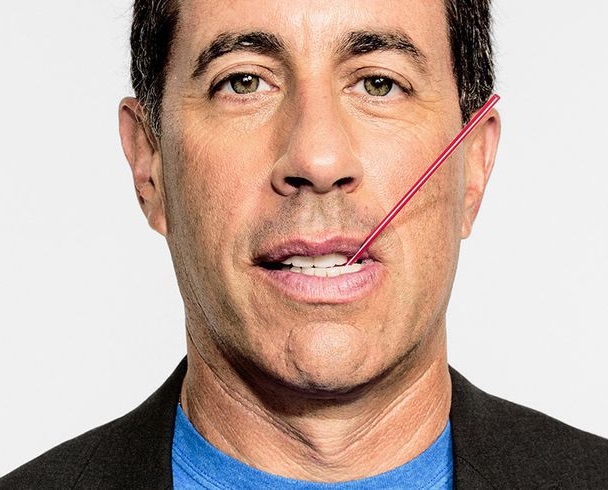
When shows that are as original and successful as Letterman's and Ferguson's get put on the air for long runs, it begs the question why studios and executives are currently making the same thing and repeating formulas in such great numbers, as with The Nightly Show and  Late Late Show with James Corden on TV and the string of sequels released in the theatres. Is it to build a franchise? Is it to continue with a property it's already acquired? Is this a fear based decision that prevents studios from taking a chance on something that may fail and lose money because it upsets an audience it tries to challenge? With a culture that is getting more and more sensitive, comedians have taken notice. Bill Maher has been commenting on this for decades, even naming one of his shows "Politically Incorrect." But, Maher is a comedian that has built a reputation and audience by pushing buttons and upsetting people. Jerry Seinfeld, on the other hand, is a comedian that has a reputation for being clean. That said, it's not to be taken lightly when Seinfeld was on Colin Cowherd's ESPN show and talked about how political correctness is changing people to the point where words like "racist," "sexist," and "prejudice " are used by people that "don’t know what the fuck they're talking about.” If this is a buzzword culture that America is turning into, it's important to realize that the people using these words, even if they are misappropriating them, believe in them. To this end, it's understandable why the media may want to adjust their programming to be sensitive to members of its demographic, stick with proven molds. With Fallon so well liked, it's no wonder CBS wants it's own nice guy in Jim Corden, or that they have him use the Graham Norton format of bringing all guests out at the same time, something new to American TV, but a hit when Norton uses it on BBC.

However, comedy is something that historically makes people uncomfortable. Comedy clubs are often underground, dark and filled with people that are drinking. Taking the gas out of unfortunate truths, jokes often come off as insensitive, but if they were sensitive they wouldn't be jokes, they would be basic observations. It's not easy to go in front of a group of people and make them laugh. It would be even harder to make them laugh by catering to each person's emotional response. This is why comedians don't think about what someone will tweet or write on a blog in response to a joke. It becomes a numbers game, appealing to the mass audience while ignoring who gets upset. When people tweet about offensive material, they can build steam, and that is why buzzwords and hashtags bring a backlash on comedians. When Bill Maher brought up the Seinfeld quote on his show Real Time, guest Jeff Ross addressed the idea of political correctness and comedy in a significantly more serious way than he speaks to anyone he roasts on Comedy Central specials:

Jeff Ross, seriously funny.
“Why do comedians have to water down? Comedy is medicine, it’s the best medicine. Laughter: you don't want it generic, you want it potent. We have a responsibility to shine a light on the darkest aspects of society… I once did a show for sensitive people; they wanted to become better at taking a joke. That’s what was so great about roasting criminals. I was curious if they would laugh at themselves. I think that’s the first step towards rehabilitation. And some of these PC police should try that, not taking themselves so seriously, not taking EVERYTHING so seriously.”

When you remove the mass commercial appeal and formulaic constructs used by television, you get the freedom to do and say what you want without the fear of serious audience members and their backlash forcing executives to pull the plug on a show. Without focus groups reshaping a program, creative talent gets the chance to go down unfamiliar and exciting roads. Going down these new paths are the routes people take to grow and bring about evolution. Where programming like The Howard Stern Show is fueled by upsetting people when they turn complaining callers into their own joke, other shock jocks that imitate Stern don't have an audience as big as his and aren't afforded as much leverage. Opie and Anthony never got rewarded for their stunts, they only got canceled and fined. Being dangerous, or moving against the grain in new and creative ways has become harder and harder, even with comedy. Still, there is possible to get away with new styles and approaches to comedy that have no regard for sponsors and demographics.

Doug Benson, likely high right now.
Comedians get to shift their direction with the internet, a place where being canceled isn't a concern. Youtube has given Doug Benson, Sarah Silverman, Reggie Watts, Natasha Leggero, Norm Macdonald and many others free range on VPN's Channel. There isn't a television network alive --cable, network or premium-- that would air Doug Benson's Getting Doug With High. With a singular premise of inviting comedians and celebrities to his set to smoke pot and see what happens during their conversation, Getting Doug With High can get tens of thousands of viewers in a week, hundreds of thousands in a month and over a million within a year. Eight months since it's live broadcast, the Jack Black episode reached over 1.5 million hits. With a barebones set, Benson's show has gotten sponsored by companies that make smoking accessories and helped brand him as a comedian who tours with his stand-up routine, does podcasts and a live event called Doug Loves Movies, where he talks over movies, ala MST3K, while an audience watches the movie with him. 

The show they never wanted to air.
With VPN, the Jash Network has released a series of videos that allows Sarah Silverman, Michael Cera, Tim and Eric, and Reggie Watts to let their comic sensibility run free. Keeping budgets small and working with their friends, the role of money isn't as important as it would be if these videos were being produced by a big name studio or tied to a company that would broadcast them to a large audience over the air.  With the internet, creativity is the only thing needed for these comedians to make their videos. In 2012, Silverman made a pilot for NBC called Susan 313. It was produced by Ron Howard and never aired on television, but it was placed on youtube with the permission of 20th Century Fox before it was made private. Focus groups may have prevented the show from airing, and Silverman doesn't hold any hard feelings. In the introduction she made for the episode she posted, she says, "they probably did the right thing,  but we liked the show," to make it clear that posting the video was just a way to share it with her fans. Putting Susan 313 on Youtube may have been the first step in seeing Youtube as a platform for Jash, a new way to release sketches directly to fans.


The internet is now a place where comedians with experience in movies and television go to work on passion projects they release as videos and podcasts, and where their fans get to enjoy them at their most raw. After Marc Maron's podcast, WTF, became a success, IFC gave a him a show that reinvigorated his career as a hipster icon. On the internet airwaves, Maron and his guests are permitted to say whatever they want on a show that will cross-promote his IFC show and stand-up. In this way, Maron is actively using the internet to build a brand just like Doug Benson. It's no surprise that this freestyle approach to comedy is turning the digital landscape into a poaching ground.
Two politicians walk into a
bar... wait... let's start over. 

Even though well-known comedians may be using the internet to it's fullest potential, the web is the best place to find up-and-coming talent while it's still untouched  by corporate hands. Jash and VPN is the place for the pet projects of Silverman and her friends, but Funny or Die is the user-based content driven website that asks anyone with an idea and a camera to make people laugh. Operating as a production company, Funny or Die has the potential to change the face of comedy, or at least give comedy new faces. Drunk History is probably the most successful thing to come from Funny or Die. Originally a series of shorts, Drunk History records drunk comedians as they narrate historical events for people to later act out. With enough popularity, the show has made two seasons for Comedy Central and  been adapted into a U.K. version. The positive reception of Drunk history, and Funny or Die as a whole, had HBO buy a stake in the site and commission 10 episodes for original programming. Funny or Die also gave Zach Galifianakis a place to release his hit Between Two Ferns. 

"It must kind of stink  that you can't run  like three times."
Galifianakis used his show to deconstruct a talk show format with an unscripted dialogue between celebrities. These conversations often came off as a direct attempt at making the celebrities angry, bringing up past relationships with Brad Pitt, asking Natalie Portman for her number or trying to place his hand on the crotch of Michael Cera. The success of Between Two Ferns is great for two main reasons. First, it directly profits from the hollywood milieu it exists to mock. Secondly, it wasn't supposed to be watched in the first place. Originally, the short was meant to be part of The Right now! Show. The pilot wouldn't get picked up, so the short was put on Funny or Die where it found a new life.  Regardless of antics, intentional rudeness and non sequiturs, the show became so popular that President Obama would appear for an episode that has over 11 Million views, Comedy Central would release a special, Between Two Ferns: A Fairytale of New York, and it would receive two Emmy nominations, and win one, at the 65th annual event. With its Emmy, Between Two Ferns has proved it's possible to make a show that will get ratings, famous guests and earn critical acclaim by using the internet to push boundaries production companies are too scared to push.

With each generation, styles and tastes shift. The idea of appropriate, marketable and trendy content changes with the times. While nudity used to be something only in magazines, it became common in movies and worked its way onto television with the right camera angle. But once an idea becomes popular, it's here to stay. The only difference is that with the internet, the judgement call is being taken out of the hands of people in suits that try to repeat proven formulas. The power is now in the hand of the internet audience to decide if something is funny or if it will die. In the digital age, audiences are telling television and movie studios what they want, because youtube is the new focus group and a hit count is the new Nielsen rating.

Monday, June 8, 2015

Black Mirror: The Present Tense of The Future's Digital Dystopia

FAIR WARNING: This article contains spoilers

Right now you are using what Charlie Brooker calls a "black mirror." You may be using more than one if you have a television on in the background. Black mirrors are the screens of smartphones, computer monitors and televisions that are making up the new ways people digest media and communicate with one another. In the 21st century, people are using social media and text messages to talk to each other instead of making phone calls. While print media is on the decline, information is being published on the internet. Even television has moved from traditional broadcast formats, with writers and actors developing programming for Netflix and Youtube, bypassing network TV. While technology changed the way we do things in very noticeable ways, it comes with side effects that may not be as obvious. It is the side effects of technology that Black Mirror chooses to talk about. It's common for science fiction to examine complex ideas and offer parables to give readers a glimpse of beautiful worlds. Black Mirror uses the science fiction genre to explore the impending horrors the digital age brings closer while making unsettling futures to create satirical dystopian realities we may live in one day.

Charlie Brooker explains it all.
In many ways, Black Mirror gives Brooker the opportunity to continue his lambasting of modern culture and its relationship with television. With a six part mini-series entitled "How TV Ruined Your Life," Brooker rants on how television shows have warped people's notions of beauty, given them expectations of life they will never see, and generally misinformed them throughout their lives. It's just a little funny that these mini documentaries were produced for television. The series is on Youtube (for now), and would be a good introduction to the way Brooker uses cynicism, sarcasm and vitriol to make his point. He makes the same points in Black Mirror that he makes in How TV Ruined Your Life, only he does so with hour long dramas in what may be the best anthology to come along since Twilight Zone. 

There are no elements of the future in the first episode of Black Mirror. Flying cars and laser guns are nowhere to be seen and android police play no role in the world of  "The National Anthem." In a lot of ways, it has a visual tone of an Aaron Sorkin drama, with his signature "walk and talk" style building a fast paced world where the characters are constantly moving and information is flying at the characters and audience at an unbelievable rate. Sound familiar? When you take a step back, it is dark view of our current world that we are looking at. "The National Anthem" opens with a wake up call, literally. The Prime Minister is woken by colleagues to find out the Princess has been kidnapped. Posted on Youtube, the ransom video shows the princess, tied up, reading a demand letter that says she will only be released if the Prime Minister has sex with a pig on live television, by 4pm. Even though the British Government takes down the video from Youtube and urges local media to not give the matter attention, it's new media that takes over and lets the video  and story go viral.

"The Princess & The Plea"
The episode soon moves to the setting of a television news room. When the producer mentions that adhering to the D Notice, which has kept the story from breaking on the air, a smart mouthed member of the show lets everyone know that "facebook's coverage is pretty comprehensive." This is where the heart of the episode comes out. Local people are shown glued to their televisions and smartphones for updates while discussing the kidnaping and terms among  themselves. It's the screens (black mirrors) that act as the driving force behind the reality these characters live in. With cellphones, televisions and tablets updating the politicians, journalists and viewers, the audience watches people addicted to black mirrors as if they were watching a news story develop in real time. "The National Anthem" has its events mirror a real news story, with constant coverage and speculation turning horrific events into reality TV which is brought to light when Mrs. Callow address how people react to a world where such misfortunes are used as building blocks for the 24 hour news cycle, saying: "I know People, we love humiliation."

The audience watches the people living in this version of England, as they go from screen to screen for information, getting feedback from people on Twitter and Facebook, watching a TV journalist use her phone to send racy photos to a member of the PM's staff to get undisclosed information that puts her life in danger as she searches for footage that will draw in more viewers. Every step of the way, black mirrors move the story to its frightening conclusion. By the end, the event is revealed to have been masterminded by a prize-winning artist and a broadcaster notes that an art critic referred to it as "'the first great artwork of the 21st. Century,' in an event in which we all participated."

In an interview with The Guardian, Brooker says the following: "If technology is a drug – and it does feel like a drug – then what, precisely, are the side-effects? With "The National Anthem," the side effects present a culture that is so obsessed with cable news and social media that it fails to see how they are being used by the artist that is also manipulating the prime minister. The world of "National Anthem" shows a culture where the participation of viewers that "love humiliation" create Mr. Callow's fate, a culture where the audience watching the Prime minister and the audience of "The National Anthem" are blurred and suggested to be the same.

Hot Shot is forced on Bing for the Fifteen Millionth time
Black Mirror goes on to put its audience in the show with episode two. "Fifteen Million Merits" shows a future world where people either ride a stationary bike to earn merits or clean up after the cyclists. In this future, the highest aspiration available to people is to earn enough merits (15 Million) to use for a ticket to participate on a reality TV show, Hot Shot, that will give them a new life or embarrass them in front of the world. Personal values and the importance of human connection is questioned where people spend merits on accessories for their avatars, to play video games, eat and skip commercials put on the screens occupying their surround walls.

In this dystopian future, Bing wakes up every day to mount a cycle. While the people around him play games, build their avatars, and watch pornography as they cycle, he is uninterested by the digital options, and pays to avoid ads that urge him to be a consumer. Bing lives a mostly solitary life until Abi joins the cycling team. Struck with her beauty and vocal talent, Bing uses the merits he inherited upon his brother's death to buy her a ticket to compete on Hot Shot. While people watch her sing from their room, their avatars take up space in the theatre, make facial expressions and mime their movements. Even though the audience enjoys her performance, the judges convince her to become an adult actress. This leaves Bing heartbroken, meritless and just as alone as he was before meeting her.

With a new mission, Bing puts in as many hours on the bike as he can. Opting to eat the leftovers of other cyclists and watching every commercial, a montage shows Bing earning enough merits to gain an audition on Hot Shot. With everyone's avatar joining the judges as they watch, Bing begins to dance before taking a shard of glass to his throat. In a long speech, Bing address the judges, the audience of Hot Shot and people watching Black Mirror, the people the avatars are a stand-in for:

"All we know is fake fodder and buying shit. That's how we speak to each other, how we express ourselves, is buying shit. What, I have a dream? The peak of our dreams is a new app for our Dopple, it doesn't exist! It's not even there! We buy shit that's not even there. Show us something real and free and beautiful. You couldn't. Yeah? It'd break us. We're too numb for it. I might as well choke. It's only so much wonder we can bear. When you find any wonder whatsoever, you dole it out in meagre portions. Only then until it's augmented, packaged, and pumped through 10,000 preassigned filters till it's nothing more than a meaningless series of lights, while we ride day in day out, going where? Powering what?"

When Bing addresses the judges, with the excerpt above, it is no longer him. These words are from Charlie Brooker and sound like the commentary he uses on How TV Ruined Your Life. The judges and avatars that face Bing are the real world. This speech nearly breaks the fourth wall to comment on the consumer culture of Black Mirror's audience by placing them in the future where they are cogs in a machine, earning merits to be spent on non-existent things that are constantly at reach and being dangled in front of them with their own black mirrors.

With a twist ending, Bing gets commissioned by a judge to makes his own show, where he rages to an audience about the world they live in. Though Bing is seen finishing a show in his nice apartment, drinking orange juice from a pitcher instead of a packaged container, the episode ends with him just as alone as he was in the beginning. Regardless of class, "Fifteen Million Merits" shows a future so burdened by consumerism, filled with people that live through dopples and absent of real experiences, that even winning the game show that everyone tunes in to can't help change who someone truly is, or influence their quality of life.

With four more episodes and a Christmas special starring Jon Hamm, Brooker went on to give more focus to dystopian futures fueled by man's relationship with technology. These episodes have a recurring theme of how technology will make us more distant from one another, more focused on our technology and more interested in our new eyes than the world we're looking at. But it's the first two episodes that actually bring the viewers in by giving them analogues through the avatars of "Fifteen Million Merits," and viewers of "The National Anthem," that make those episodes so life like that it's hard not to see how the side effects of technology have already begun to take root.

For anyone interested in Black Mirror, you can buy the dvd box sets or find them on Youtube before they're taken down.